Fox CS, Massaro JM, Hoffmann U, et al. Abdominal visceral and subcutaneous adipose tissue compartments: association with metabolic risk factors in the Framingham Heart Study. Circulation. 2007;116(1):39-48.
Hairston KG, Bryer-Ash M, Norris JM, et al. Lifestyle factors and 5-year abdominal fat accumulation in a minority cohort: the IRAS Family Study. Obesity (Silver Spring). 2012;20(2):421-427.
Hewagalamulage SD, Lee TK, Clarke IJ, Henry BA. Stress, cortisol, and obesity: a role for cortisol responsiveness in identifying individuals prone to obesity. Domest Anim Endocrinol. 2016;56:S112-S120.
Mozaffarian D, Katan MB, Ascherio A, Stampfer MJ, Willett WC. Trans fatty acids and cardiovascular disease. N Engl J Med. 2006;354(15):1601-1613.
Thorp AA, Owen N, Neuhaus M, Dunstan DW. Sedentary behaviors and subsequent health outcomes in adults: a systematic review of longitudinal studies, 1996–2011. Am J Prev Med. 2011;41(2):207-215.
Shuster A, Patlas M, Pinthus JH, Mourtzakis M. The clinical importance of visceral adiposity: a critical review of methods for visceral adipose tissue analysis. Br J Radiol. 2012;85(1009):1-10.
Ibrahim MM. Subcutaneous and visceral adipose tissue: structural and functional differences. Obes Rev. 2010;11(1):11-18.
Vispute SS, Smith JD, LeCheminant JD, Hurley KS. The effect of abdominal exercise on abdominal fat. J Strength Cond Res. 2011;25(9):2559-2564.
Kostek MA, Pescatello LS, Seip RL, et al. Subcutaneous fat alterations resulting from an upper-body resistance training program. Med Sci Sports Exerc. 2007;39(7):1177-1185.
Paoli A, Casolo A, Saoncella M, et al. The Effect of Localized Muscle Endurance Resistance Training on Regional Fat Loss: A Systematic Review and Meta-Analysis. Int J Environ Res Public Health. 2021;18(11):5749.
Ouchi N, Parker JL, Lugus JJ, Walsh K. Adipokines in inflammation and metabolic disease. Nat Rev Immunol. 2011;11(2):85-97.
Ohkawara K, Tanaka S, Miyachi M, Ishikawa-Takata K, Tabata I. Dose-response relationship between aerobic exercise and visceral fat reduction: systematic review of clinical trials. Int J Obes (Lond). 2007;31(12):1786-1800.
Swift DL, Johannsen NM, Lavie CJ, Earnest CP, Church TS. The role of exercise and physical activity in weight loss and maintenance. Prog Cardiovasc Dis. 2014;56(4):441-447.
Hall KD, Sacks G, Chandramohan D, et al. Quantification of the effect of energy imbalance on bodyweight. Lancet. 2011;378(9793):826-837.
Leidy HJ, Clifton PM, Astrup A, et al. The role of protein in weight loss and maintenance. Am J Clin Nutr. 2015;101(6):1320S-1329S.
Hairston KG, Vitolins MZ, Norris JM, Anderson AM, Hanley AJ, Wagenknecht LE. Lifestyle factors and 5-year abdominal fat accumulation in a minority cohort: the IRAS Family Study. Obesity. 2012;20(2):421-427.
McKeown NM, Troy LM, Jacques PF, Hoffmann U, O'Donnell CJ, Fox CS. Whole-grain intake is favorably associated with body fat distribution in older adults in the Framingham Offspring Study. Am J Clin Nutr. 2010;92(5):1165-1171.
Buckley JD, Howe PR. Long-chain omega-3 polyunsaturated fatty acids may be beneficial for reducing obesity—a review. Nutrients. 2010;2(12):1212-1230.
Vissers D, Hens W, Taeymans J, Baeyens JP, Poortmans J, Van Gaal L. The effect of exercise on visceral adipose tissue in overweight adults: a systematic review and meta-analysis. PLoS One. 2013;8(2):e56415.
Slentz CA, Bateman LA, Willis LH, et al. Effects of aerobic vs. resistance training on visceral and liver fat stores, liver enzymes, and insulin resistance by HOMA in overweight adults (STRRIDE AT/RT). Am J Physiol Endocrinol Metab. 2011;301(5):E1033-E1039.
Maillard F, Pereira B, Boisseau N. Effect of High-Intensity Interval Training on Total, Abdominal and Visceral Fat Mass: A Meta-Analysis. Sports Med. 2018;48(2):269-288.
Paoli A, Pacelli QF, Neri M, et al. The effect of muscle endurance resistance training on regional fat loss. J Sports Med Phys Fitness. 2013;53(6):577-584.
Chyba M, Post A, Bockelman B, et al. Running vs. Cycling: Impact on Visceral Adiposity. J Sports Sci Med. 2021.
Meyer PF, et al. Effects of Cryolipolysis on Abdominal Adiposity. Case Rep Dermatol. 2018.
Jacob C, Kent D. Efficacy and safety of simultaneous application of HIFEM and synchronized radiofrequency for abdominal fat reduction and muscle toning: A multicenter MRI evaluation study. Dermatol Surg. 2018.
Weiss RA, Bernardy J. Induction of fat apoptosis by a non-thermal device: Mechanism of action of non-invasive high-intensity focused electromagnetic technology in a porcine model. Lasers Surg Med. 2019;51(1):47-53.
Kinney BM, Lozanova P. High intensity focused electromagnetic therapy evaluated by magnetic resonance imaging: Safety and efficacy study of a dual tissue effect based non-invasive abdominal body shaping. Lasers Surg Med. 2019;51(1):40-46.
Duncan D, Dinev I. Noninvasive induction of muscle fiber hypertrophy and hyperplasia: effects of high-intensity focused electromagnetic field evaluated in an in vivo porcine model. Aesthet Surg J. 2020;40(5):568-573.
Fritz K, Salavastru C, Gyurova M. Safety and Efficacy of a High-Intensity Focused Electromagnetic Field (HIFEM) Device for Abdominal Body Contouring. J Cosmet Dermatol. 2020.
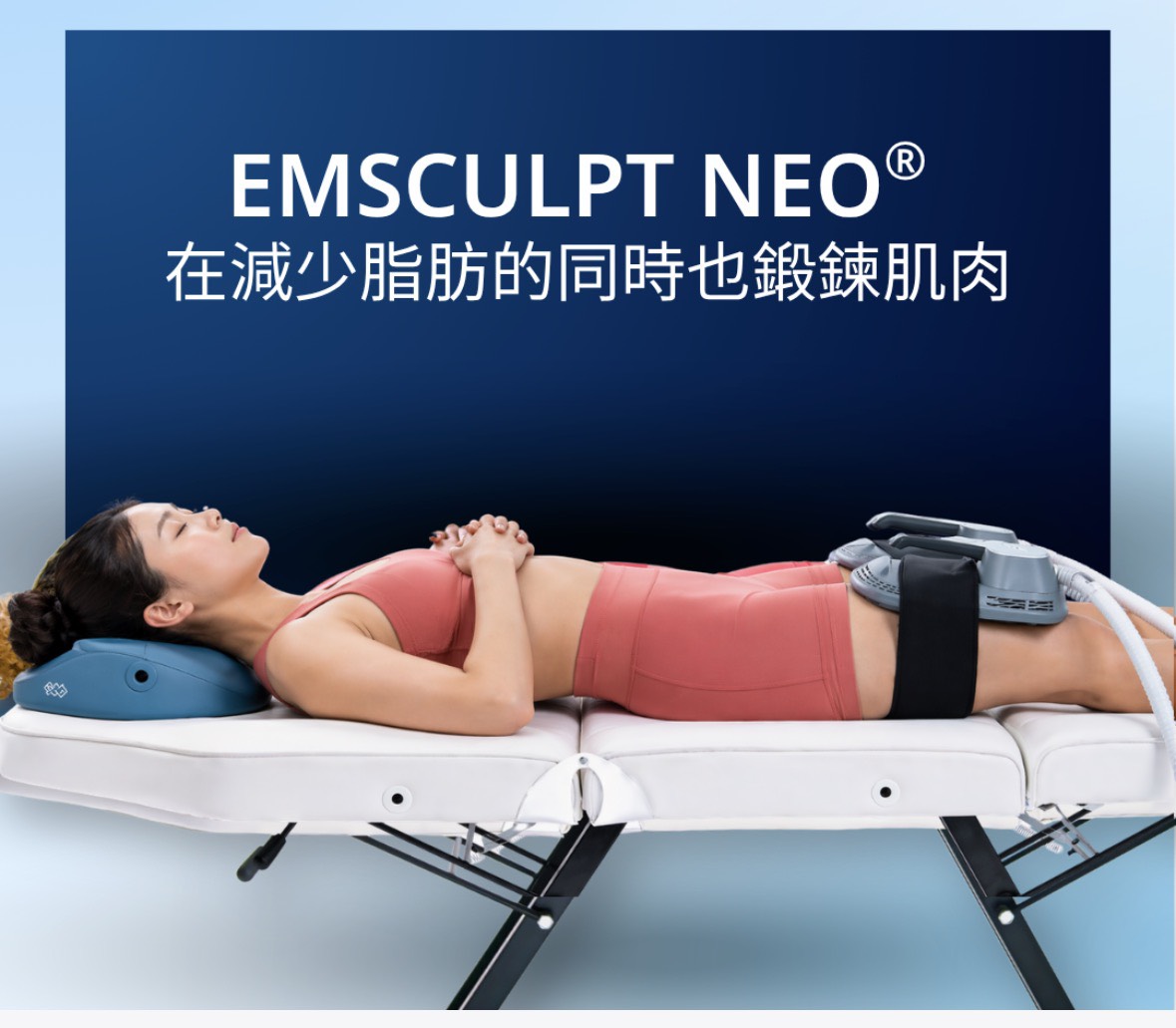
Mazzuco R. Safety and Efficacy of Emsculpt Neo for Body Contouring. Clin Cosmet Investig Dermatol. 2021.
University of Sydney. Spot reduction: why targeting weight loss to a specific area is a myth. University of Sydney News. 2023.




 由深耕高雄的劉中平院長領軍